
Executive Summary
Ethiopia's security interest in Somalia is best protected by working through Mogadishu, the African Union (AU) and the Ankara process, while strengthening its own border security and assessing its maritime exposure before signing new agreements. The decisive date is 31 December 2026. The United States told the AU on 1 July 2026 that it will not fund UN logistics for the AU Support and Stabilization Mission in Somalia (AUSSOM) beyond that date, and the mission's mandate expires then. The period leading to this deadline warrants sustained diplomatic and security attention. Somalia's deterioration predates the 2024 political disputes. The offensive against Al-Shabaab lost momentum by mid-2023 because of funding gaps, the drawdown of the earlier AU mission (ATMIS), constraints on Somali National Army logistics and reduced operational capacity among clan militias. The federal–member-state dispute aggravated the decline but did not originate it.
Two threats need separate treatment: Al-Shabaab in south-central Somalia, and piracy, renewed since April 2026 and centered on the Puntland coast. Open sources show no operational link between them. Ethiopia's clearest exposure is on land, where Al-Shabaab's July 2022 incursion into the Somali Region is the precedent; its maritime exposure is smaller and indirect. Ethiopia should engage the federal and member states authorities as complementary partners within the framework of AU principles and give priority to a post-2026 AUSSOM agreement, border defence with the Somali regional state and a maritime risk assessment.
1. Background: the Ankara baseline
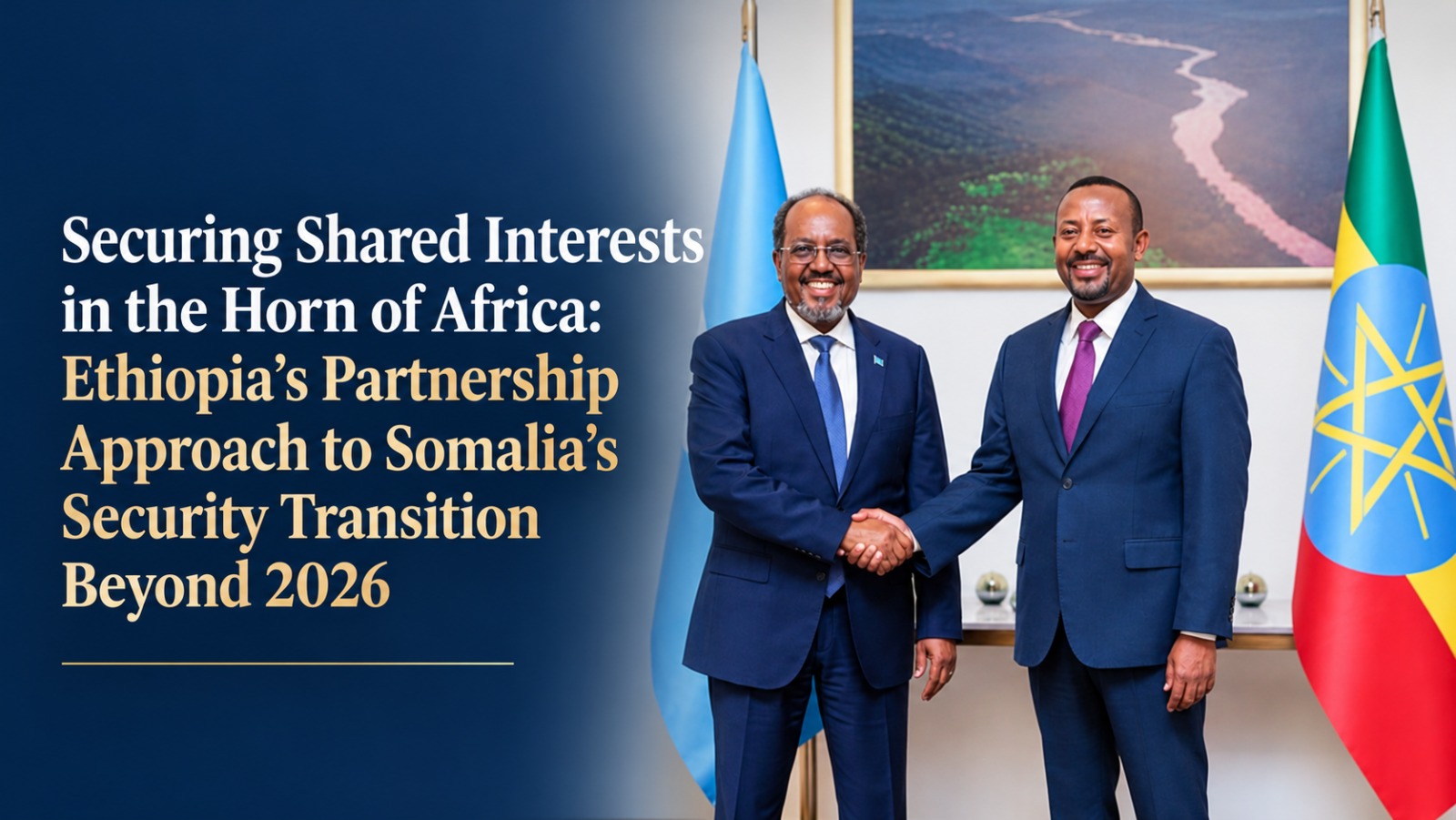
The Ankara Declaration of 11 December 2024 reset relations after the Ethiopia-Somaliland memorandum of understanding (MoU) of 1 January 2024. Under Turkish mediation, Somalia lifted its objection to Ethiopian participation in AUSSOM, and both governments committed to respect sovereignty while negotiating commercial arrangements for Ethiopian sea access. ¹ In September 2026 Somalia said the declaration remains the governing framework. ² Three matters stay open. The Somaliland MoU is unresolved rather than operative; in October 2026 Somaliland said it was ready to discuss Ethiopian access to Berbera, without terms. ³ Sea-access talks have reportedly made little progress, a claim to be checked against Ethiopian official statements. ⁴ And most Ethiopian troops serve bilaterally rather than under AUSSOM, which began operating in January 2025.⁵
2. Why Somalia's security deteriorated
The federal–member-state dispute weakened a campaign that was already stalling. A clan-militia-backed offensive retook territory in 2022, but Phase Two was postponed in June 2023, before the MoU and the March 2024 constitutional amendments. ⁶ Al-Shabaab's 2025 counteroffensive was timed to the end of the ATMIS drawdown. ⁷ The March 2026 amendments, which extended terms from four to five years and were rejected by Puntland and Jubaland, escalated the dispute only after the main territorial losses. ⁸
3. Two separate threats
Al-Shabaab: persistent security threat. The group reversed most 2022–23 gains in 2025 but stalled in the second half of the year, so the threat is entrenchment in the south-centre, rather than evidence of an imminent advance on Mogadishu. Its push toward Lower Shabelle met resistance from Somali forces backed by AU troops and US and Turkish airpower. ¹³ The dispute now has a military edge in the south-west: federal troops sent to Baidoa in March 2026 were ambushed in May, and Southwest State, which borders Ethiopia, suspended cooperation with Mogadishu. ¹⁴ Political and military risk overlap most for Addis Ababa here. The 2026 evidence is thinner and should be refreshed against UN Panel of Experts and ACLED data.
Piracy: A Separate Maritime Front.
Six commercial vessels were hijacked between 21 April and 22 August 2026, most recently the tanker Sibu 1; Somali pirates accounted for 94% of hostages taken worldwide in the first half of 2026. ¹⁵ Puntland says forces beyond its control are responsible; sources do not name them, so this brief makes no attribution. Puntland has fought ISIS-Somalia in the Cal Miskaad mountains since December 2024, which shapes its coastal force posture. ¹⁶ No evidence links the hijackings to Al-Shabaab, so earlier "safe haven" claims are dropped.
4. Implications for Ethiopia
The documented risk is a repeat of 20 July 2022, when Al-Shabaab attacked Liyu police posts in Bakool and crossed into the Somali Region, its biggest operation inside Ethiopia according to VOA. ¹⁷ Estimates of the force range from about 250 to 500 fighters. ¹⁸ Three conditions enabled it: Al-Shabaab control of Bakool and Gedo border areas, thin Ethiopian presence on the border, and forces committed elsewhere during the Tigray war. These are the indicators to watch. Al-Shabaab has not claimed attacks in Ethiopia since mid-2022, so a repeat is credible but not demonstrated. ¹⁹
Egypt and Somalia signed a defence agreement in August 2024, and a contingent of just over 1,000 is due to join AUSSOM; Somalia attributes the delay to funding and logistics.²⁰ The sources reviewed do not establish an intention by Egypt to contribute to instability in Somalia, though analysts warn Somalia could become a proxy theatre if tensions between Egypt and Ethiopia escalate. ²¹ A practical priority is ensuring coordination and avoiding operational misunderstandings wherever forces are deployed.
Turkey brokered the Ankara Declaration and has maintained diplomatic engagement with both capitals, making it central to any sea-access or AUSSOM compromise. In January 2026 Mogadishu cancelled all UAE agreements, including port deals at Berbera, Bossaso and Kismayo, after Israel recognized Somaliland; Somaliland, Puntland and Jubaland rejected the decision. ²² Ethiopia's Berbera interest and the federal dispute both run through this relationship.
Djibouti carried 96.71% of Ethiopia's external freight in fiscal 2025/26, and Berbera 2.74% of the 15.34 million tons on maritime corridors. ²³ Exposure is therefore indirect: ships serving both ports cross the Gulf of Aden, where Sibu 1 was seized. Available data do not establish the effect of piracy on Ethiopian freight costs; this should be assessed when considering future maritime security arrangements.
5. The Federal Government's Case
The Federal Government of Somalia presents its constitutional reforms as a step toward electoral and institutional change; questions concerning political consensus and security implications remain relevant. This brief does not assess their legal merits. The government says the amended constitution replaces clan-based power-sharing with one person, one vote, harmonizes state and federal electoral cycles, and was validly passed and signed on 8 March 2026, so the mandate runs to 2027. ²⁴ Voter registration is scheduled for 1-22 November 2026. ²⁵
Critics, including Puntland, Jubaland, former presidents and the Somali Future Council, say the changes lacked consensus and the required two-thirds majority. ²⁶ Parliament's four-year mandate ended in April 2026 without a transition plan. ²⁷ The sources reviewed do not show how a direct vote would work where Al-Shabaab holds or contests territory.
Ethiopia has committed to work with the federal government and gains most from a Somalia able to sustain a joint front against Al-Shabaab. A contested political process may create security challenges regardless of its eventual outcome, so Ethiopia should support inclusive, AU or Turkey-facilitated dialogue over any position on who is right.
6. Recommendations
• Work through established frameworks. Ethiopia should continue to act through the federal government of Somalia, the African Union and the Ankara process, and engage Somalia’s federal member states as complementary partners within the framework of AU principles.
• Prioritize a post-2026 AUSSOM arrangement. Ethiopia should work with Mogadishu, the AU and its partners to secure a clear post-2026 arrangement for Ethiopian participation, in view of the reported 31 December 2026 deadline for the mandate and associated logistical support.
• Strengthen border security with the Somali Regional State. Ethiopia should reinforce border defence and monitor the conditions that enabled the July 2022 incursion: control of border areas in Bakool and Gedo, the level of Ethiopian presence along the border, and competing military commitments elsewhere.
• Assess maritime exposure before new agreements. Ethiopia should commission a risk assessment of piracy’s effect on freight costs and corridor reliability to inform consideration of future maritime or anti-piracy agreements.
• Support inclusive political dialogue. Ethiopia should encourage AU- or Turkey-facilitated dialogue on Somalia’s electoral and constitutional process while respecting Somalia’s sovereignty and without taking a position on the legal merits, since a contested process is a security concern whichever side prevails.
• Maintain a balanced approach and coordinate with other partners. Ethiopia should continue to maintain a balanced approach toward Mogadishu and the federal member states, and reassess it as developments unfold, including the potential deployment of Egyptian forces to Somalia under bilateral arrangements.
References
1. Federal Republic of Somalia, Ministry of Foreign Affairs. “Communique: Ankara Declaration 11 December 2024.” https://web.mfa.gov.so/communique-ankara-declaration-11-december-2024/
2. Garowe Online. “Somalia Says Ankara Declaration Governs Ties With Ethiopia, Somaliland Deal No Longer Relevant.” 2 September 2026. https://garoweonline.com/en/news/somalia/somalia-says-ankara-declaration-governs-ties-with-ethiopia-somaliland-deal-no-longer-relevant
3. Horn Diplomat. “Somaliland Backs Ethiopia’s Sea Access, Urges Dialogue.” 12 October 2026. https://www.horndiplomat.com/somaliland-backs-ethiopias-sea-access-urges-dialogue/
4. AFP via allAfrica. “Somalia-Ethiopia Talks Mediated By Türkiye Stall Over Somaliland Port Deal.” 11 July 2025. https://allafrica.com/stories/202507110403.html
5. Security Council Report. “February 2025 Monthly Forecast: Somalia.” https://www.securitycouncilreport.org/monthly-forecast/2025-02/somalia-39.php
6. Muibu, Daisy. “Somalia’s Stalled Offensive Against al-Shabaab: Taking Stock of Obstacles.” CTC Sentinel, February 2024. https://ctc.westpoint.edu/somalias-stalled-offensive-against-al-shabaab-taking-stock-of-obstacles/
7. FDD’s Long War Journal. “Shabaab mounts coordinated assault north of Mogadishu.” 3 March 2025. https://www.fdd.org/analysis/op-eds/2025/03/03/shabaab-mounts-coordinated-assault-north-of-mogadishu/
8. Africa at LSE. “Somalia is about to enter a constitutional crisis.” 13 May 2026. https://blogs.lse.ac.uk/africaatlse/2026/05/13/somalia-is-about-to-enter-a-constitutional-crisis/
9. Critical Threats. “Al Shabaab’s Area of Operations.” https://www.criticalthreats.org/analysis/al-shabaabs-area-of-operations
10. EUAA. “COI Report – Somalia: Security Situation.” May 2025. https://www.euaa.europa.eu/print/pdf/node/26897
11. (Suggested) FDD’s Long War Journal. “Shabaab mounts coordinated assault north of Mogadishu.” 3 March 2025. https://www.fdd.org/analysis/op-eds/2025/03/03/shabaab-mounts-coordinated-assault-north-of-mogadishu/
12. Somali Guardian. “Somalia’s 2026 security impasse: The geography of an unwinnable war.” 2 July 2026. https://www.somaliguardian.com/news/somalia-news/somalia-security-impasse-2026/
13. International Crisis Group. “New Chapter, Same Stalemate: Somalia’s War with Al-Shabaab.” Africa Briefing N°212, 30 June 2026. https://www.crisisgroup.org/brf/africa/somalia/b212-new-chapter-same-stalemate-somalias-war-al-shabaab
14. Hiiraan Online. “Southwest State suspends cooperation with federal government.” 17 March 2026. https://www.hiiraan.com/news4/2026/Mar/204687/southwest_state_suspends_cooperation_with_federal_government.aspx
15. Reuters via gCaptain. “US-Sanctioned Oil Tanker ‘Sibu 1’ Rescued from Somali Pirates.” 25 September 2026. https://gcaptain.com/us-sanctioned-oil-tanker-sibu-1-rescued-from-somali-pirates/
16. allAfrica. “Somalia: Puntland Forces Deal Major Blow to Islamic State in Calmiskaad Mountains.” 3 September 2025. https://allafrica.com/stories/202509030390.html
17. Maruf, Harun. “Al-Shabab Attacks Somali Towns Close to Ethiopian Border.” VOA, 20 July 2022. https://www.voanews.com/a/al-shabab-attacks-somali-towns-close-to-ethiopian-border-/6667670.html
18. Critical Threats. “Africa File: Al Shabaab Attacks Ethiopia.” https://www.criticalthreats.org/print/brf_62e2e191455c0
19. Al Jazeera. “Ethiopia says it foiled al-Shabab attack near border with Somalia.” 7 June 2023. https://www.aljazeera.com/news/2023/6/7/ethiopia-says-it-foiled-al-shabab-attack-near-border-with-somalia
20. Dawan Africa. “Somalia Says Funding Hurdles Delay Egyptian Troops Deployment to AUSSOM.” 1 September 2026. https://www.dawan.africa/news/somalia-says-funding-hurdles-delay-egyptian-troops-deployment-to-aussom
21. Africa Defense Forum. “Egypt-Somalia Defense Pact Escalates Horn Tensions.” September 2024. https://adf-magazine.com/2024/09/egypt-somalia-defense-pact-escalates-horn-tensions/
22. Al Jazeera. “Somalia cancels all agreements with UAE over alleged sovereignty violations.” 12 January 2026. https://www.aljazeera.com/news/2026/1/12/somalia-cancels-all-agreements-with-uae-over-alleged-sovereignty-violations
23. Borkena. “Ethiopia Cargo Volume Hits 17.5M Tons as Djibouti Handles Bulk of Trade.” 24 August 2026. https://borkena.com/ethiopia-cargo-volume-hits-17-5m-tons-as-djibouti-handles-bulk-of-trade/
24. Mada Masr. “Another fracture in the Somali state?” 10 March 2026. https://www.madamasr.com/en/2026/03/10/feature/politics/another-fracture-in-the-somali-state-new-constitution-ends-12-year-provisional-governance-but-opens-new-crisis/
25. Hiiraan Online. “Somalia announces parliamentary and presidential elections for 2027.” October 2026. https://www.hiiraan.com/news4/2026/Oct/206532/somalia_announces_parliamentary_and_presidential_elections_for_2027.aspx
26. Africa at LSE. “Somalia is about to enter a constitutional crisis.” 13 May 2026. https://blogs.lse.ac.uk/africaatlse/2026/05/13/somalia-is-about-to-enter-a-constitutional-crisis/
27. The EastAfrican. “Claims of ‘expiry’ of Somalia MPs mandate cause a storm.” https://www.theeastafrican.co.ke/tea/news/east-africa/claims-of-expiry-of-somalia-mps-mandate-cause-a-storm-5428448
By Miftah Mohammed Kemal, Researcher, African Affairs Research Directorate
Disclaimer
The content disseminated by the Institute of Foreign Affairs (IFA) – including, but not limited to, publications, public statements, events, media appearances, and digital communications – reflects the views of individual contributors and does not necessarily represent the official positions or policies of the Institute, its partners, or any affiliated governmental or non-governmental entities.
While the IFA endeavours to ensure the accuracy, integrity, and timeliness of the information presented, it makes no representations or warranties, express or implied, regarding the completeness, reliability, or suitability of such content for any purpose. The Institute expressly disclaims any liability for errors or omissions, as well as for any actions taken or decisions made based on the information provided.
The inclusion of external links, references, or third-party resources does not constitute an endorsement by the Institute. Additionally, engagement on social media platforms – including, but not limited to, likes, shares, retweets (RTs), or reposts – shall not be interpreted as an endorsement or validation of the views expressed therein.
Readers and audiences are encouraged to exercise critical judgement and seek independent verification when interpreting or relying upon any information disseminated through publications and posts on the Institute’s platforms or representatives.